
Successful IVF Pregnancy with the Help of PRP in Woman with Systemic Lupus Erythematosus
Patients with systemic lupus erythematosus suffer from varying degree of subfertility & some of them have infertility. It is associated with obvious maternal and fetal complications including spontaneous abortion in first trimester. We report a case with IVF pregnancy who conceived successfully in a patient with systemic lupus erythematosus. A 32 years old nulliparous woman suffering from infertility since 7 years diagnosed with SLE 5 years back presented for IVF. She underwent frozenthawed embryo transfer after antagonist cycle of ovum pick & received autologous PRP intrauterine instillation. The patient responded well & conceived in 1st attempt of IVF. Now she has continued her pregnancy up to 6 weeks of GA without any complications. This case report indicates that the PRP can be an emerging option for improving endometrial receptivity and good outcome in IVF patients in coming years.
Introduction
Systemic lupus erythematosus (SLE) is an autoimmune disease mediated by tissue-binding autoantibodies and immune complexes in which damage of organs and cells occur. All genders, ages, and ethnic groups’ people are prone for the disease, but women of child-bearing age are an easy target accounts for almost ninety percent [1]. Dr. Laura Andreoli, Rheumatology and Clinical Immunology Unit, department of clinical and experimental sciences, University of Brescia, Italy told that SLE most commonly target women at their most fertile age group, and these women face threat of subfertility and pregnancy complications [2]. Advanced age, medication effects, , disease-related damage leads to subfertility in SLE [3]. Ostensen, et al. [4] concluded that pregnancies in women with SLE remain a challenge, and better remedies are needed yet [4]. PRP is an emerging solution for so many areas of medicine, helped here in improving endometrial receptivity and good outcome of IVF. Hereby, we are presenting a case report from our test tube baby center with successful pregnancy in a patient with SLE with the help of intrauterine PRP instillation.
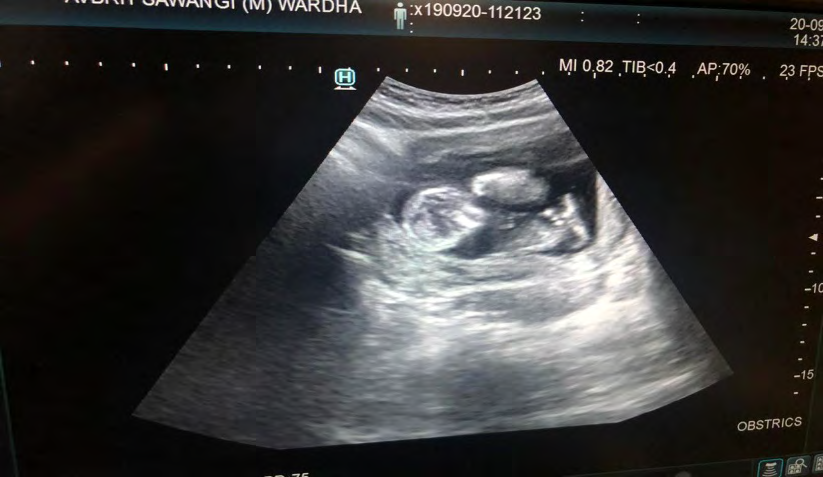
32 years old nulliparous subfertile woman married since 7 years presented at our IVF center with complains of infertility since 7 years. All initial infertility workup was done. Her husband’s semen analysis was normal. All her hormonal investigations were within normal limit. Her past history suggested that she was diagnosed as SLE 5 years back according to European League against Rheumatism criteria which included positive antinuclear antibody test [5]. For SLE she was treated with low dose corticosteroids & Hydroxychloroquine. She underwent frozen-thawed embryo transfer after antagonist cycle of ovum pick up & conceived in first attempt of IVF. She continued corticosteroids & hydroxychloroquine throughout the cycle. During the whole IVF cycle treatment she received Enoxaparin sodium 40 mg alternate day & Ecosprin 150 mg once daily for prevention of thrombosis. The endometrial preparation was done with estradiol orally 2 mg thrice daily from day 1 to day 16 of her menstrual cycle & it was considered adequate when measured > 8mm on ultrasound. After adequate preparation of endometrium vaginal progesterone gel once a day along with oral dydrogesterone 10 mg thrice daily was added for secretory changes of endometrium. On day 10 of hormonal cycle she received 1 ml of autologous PRP intrauterine instillation by IUI canula. Her serum HCG was 2000 mIU / ml on day 18 of embryo transfer and urine pregnancy test was positive on day 28 of embryo transfer. Now she has continued her pregnancy upto 6 weeks gestational age with cardiac activity & we are looking forward for better outcome in future.
PRP preparation method: 10 ml of venous blood was drawn from the syringe pre- filled with EDTA and centrifuged immediately at 1200 rpm for 10 minutes. The blood was divided into three layers: red blood cells at the bottom, cellular plasma in the supernatant and a buffy coat layer between them. The plasma layer and buffy coat will be collected to another tube and recentrifuged at 2000 rpm for 10 minutes. The resulting pellet of platelets was mixed with 1 ml of supernatant, and then 0.5-1ml of PRP was obtained.
| Protocol type | Antagonist |
|---|---|
| Estradiol levels before oocytes retrieval (pg/mL plasma) | 1500 |
| Progesterone levels before oocytes retrieval (ng/mL plasma) | 1.2 |
| Retrieved oocytes | 5 |
| No. of embryos transferred | 2 blastocyst |
Table 1: Ovarian Stimulation Cycle Outcomes.
| Days After Embryo Transfer | Serum hCG (mIU/mL) |
| Day 12 | 630 |
| Day 18 | 2000 |
Table 2: Pregnancy Tests with Serum HCG after Embryo Transfer.
| Indication | Post embryo transfer | 1st Trimester |
|---|---|---|
| Thromboprophylaxis | Enoxaparin 40 mg SC alternate dayEcosprin 150 mg once daily | Enoxaparin 40 mg SC alternate dayEcosprin 150 mg once daily |
| Immunosuppressant | Prednisone 5 mg once daily | Prednisone 5 mg once daily |
Table 3: Follow-Up.
Discussion
Our case report shows that in assisted reproductive technology patient with controlled SLE can conceive safely under proper anticoagulant, immunosuppressants therapy. Evidence from past literature and case reports suggest risks of assisted reproductive technology in SLE patients, including multifetal pregnancy, repeated miscarriage and ovarian hyperstimulation [6, 7, 8]. The current guidelines recommend that SLE affected woman should have quiescent phase of SLE & attain a stable remission of her renal disease for at least 6 months before conception [9]. Lupus disease activities are controlled by anticoagulants and Immunosuppressants. For SLE, most frequently prescribed steroid is Prednisolone and it belongs to the category C drug. In our centre protocol, prednisone starts from before embryo transfer and continues upto 12 weeks pregnancy is established. Women with SLE with antiphospholipid antibodies or advanced age above 35 years are considered high risk and antenatal thromboprophylaxis is prescribed through whole pregnancy, According to the RCOG Green-top Guideline No. 37a of the Royal College of Obstetricians and Gynaecologists (RCOG). Enoxaparinux sodium is an LMWH that blocks factor Xa and factor IIa. According to FDA, enoxaparin sodium belongs to the category B drug. Joffe, et al. [10] recommended that SLE with pregnancy should be considered appropriate candidates for anticoagulation treatment throughout the whole gestation [10]. In our protocol, an antithrombotic drug (low-dose aspirin or LMWH) starts from 3 days before embryo transfer and continues throughout the pregnancy. The use of platelet-rich plasma (PRP) to enhance endometrial receptivity is acquiring attention in assisted reproduction technologies. Bos-Mikich, et al. [11] revealed that autologous PRP intrauterine instillation enhances pregnancy and birth rates. Since long time, it is noted that growth factors and cytokines play a crucial role during embryo implantation. During normal endometrial growth and implantation, blood cells release these signaling molecules [11]. Here, PRP played an important role in improving endometrial receptivity and good outcome of IVF.
Conclusion
This case report concludes that sub fertile woman with SLE can conceive with IVF treatment successfully & PRP is helpful positively in immunomodulation by increasing endometrial receptivity for better results and for continuation of pregnancy along with continuation of her medications for SLE.
Conflict of Interest: None
References
-
Hahn BH (2014) Systemic Lupus Erythematosus. In: Kasper D, Fauci A, Hauser S, Longo D, Jameson JL, Loscalzo J, (Eds.), Harrison’s Principles of Internal Medicine, McGraw-Hill Education, New York, NY.
-
(2015) Women with lupus and APS at risk of reduced fertility and pregnancy complication. Science Daily.
-
Bermas BL, Sammaritano LR (2015) Fertility and pregnancy in rheumatoid arthritis and systemic lupus erythematosus. Fertil Res Pract 1: 13.
-
Ostensen M, Brucato A, Carp H, Chambers C, Dolhain RJ, et al. (2011) Pregnancy and reproduction in autoimmune rheumatic diseases. Rheumatol Oxf Engl 50(4): 657-664.
-
(2019) 2019 EULAR/ACR Recommendations for SLE Classification Criteria. Rheumatology Advisor.
-
Ulcova-Gallova Z (2012) Repeated miscarriages in patients with antiphospholipid syndrome and subjected to in vitro fertilization: the importance of preimplantation genetic diagnosis. Lupus 21(7): 744-746.
-
Levine AB, Lockshin MD (2014) Assisted reproductive technology in SLE and APS. Lupus 23(12): 1239-1241.
-
Bellver J, Pellicer A (2009) Ovarian stimulation for ovulation induction and in vitro fertilization in patients with systemic lupus erythematosus and antiphospholipid syndrome. Fertil Steril 92(6): 1803-1810.
-
Todd J Stanhope, Wendy M White, Kevin G Moder, Andrew Smyth, Vesna D Garovic (2012) Obstetric Nephrology: Lupus and Lupus Nephritis in Pregnancy. Clinical Journal of the American Society of Nephrology 7(12): 2089-2099.
-
Joffe GM, Aisenbrey GA, Argubright KF (2005) Budd- Chiari syndrome, systemic lupus erythematosus, and secondary antiphospholipid antibody syndrome in pregnancy. Obstet Gynecol 106(5): 1191-1194.
-
Bos-Mikich A, Ferreira MO, Oliveira R de, Frantz N (2019) Platelet-rich plasma or blood-derived products to improve endometrial receptivity? J Assist Reprod Genet 36(4): 613-620.
- Postpartum Maternal Mental Health - A Narrative Review
- Beta HCG in Cervico-Vaginal Secretion as a Predictor of Preterm Delivery
- Successful Management of Mid Trimester Foetal Death with Major Placenta Previa by Expectant Management Followed by Induction of Labour
- To Evaluate the Expression of Egr2 Gene in Term Low Birth Weight Newborns
- Impact of Maternal Obesity on Maternal and Foetal Outcomes: A Prospective Cohort Study from Northern India
- ‘’Benefit of Pulsatile GnRH Therapy in Treatment of Functional Hypothalamic Amenorrhea (FHA) and Congenital Hypogonadotropic Hypogonadism(CHH) in Infertile Patients Over Canonical Gonadotropins with IVF –A Short Communication’’